Add description, images, menus and links to your mega menu
A column with no settings can be used as a spacer
Link to your collections, sales and even external links
Add up to five columns
Add description, images, menus and links to your mega menu
A column with no settings can be used as a spacer
Link to your collections, sales and even external links
Add up to five columns
Add description, images, menus and links to your mega menu
A column with no settings can be used as a spacer
Link to your collections, sales and even external links
Add up to five columns
Add description, images, menus and links to your mega menu
A column with no settings can be used as a spacer
Link to your collections, sales and even external links
Add up to five columns
Motor, Range and Performance
Assistance levels, torque, 250 W vs 500 W and what is road legal.
Which motor options are available?
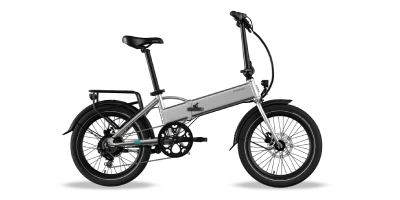
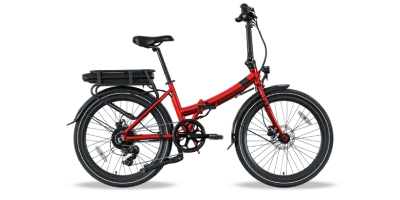
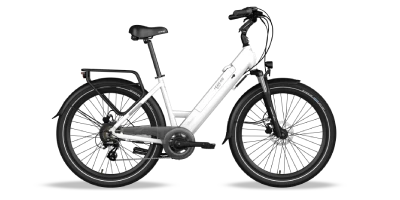
The Legend Monza, Siena, Milano and Etna 250 W use a 36 V, 250 W rear-hub motor with up to 40 Nm of torque.
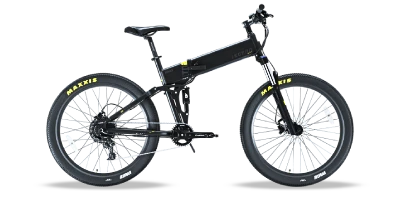
The Legend Etna 500 W uses a 48 V, 500 W rear-hub motor with up to 70 Nm of torque.
The 250 W models are configured as pedal-assisted cycles for public-road use in the EU. Their assistance decreases progressively and stops by 25 km/h. The Etna 500 W exceeds the EPAC limits and is intended primarily for off-road use where local rules permit it.
What is the maximum motor torque?
Up to 40 Nm: Legend Monza, Siena, Milano and Etna 250 W.
Up to 70 Nm: Legend Etna 500 W.
These are maximum motor figures. The assistance you feel also depends on the selected level, speed, mechanical gear, battery charge, gradient, total load and riding conditions.
How do the assistance levels work?
The motor provides assistance only while you are pedalling. On the standard Legend configuration, pedal assistance starts once the system detects pedalling and the bike reaches approximately 5 km/h.
On the Monza, Siena, Milano and Etna 250 W, assistance decreases progressively and stops by 25 km/h. You can continue riding faster using your own effort.
Assistance levels
Level 0: no motor assistance.
Level 1: up to approximately 25% of available motor power.
Level 2: up to approximately 60% of available motor power.
Level 3: up to 100% of available motor power.
Level 4: a custom motor map configured in My SmartBike, where supported.
You can adjust level 4 in My SmartBike under the motor-map settings. A stronger response gives more assistance at low speed but can make the bike react more abruptly and reduce autonomy. A gentler map provides smoother control and uses less battery.
Start with a low assistance level until you are familiar with the bike. Test any custom map in a quiet area away from traffic.
Can I convert an Etna 250 W into a 500 W model?
We do not recommend or support converting an Etna 250 W into a 500 W model.
The two versions use different motors, voltages, batteries and system configurations. A conversion would require replacing the 36 V motor and battery with compatible 48 V components, checking the controller, wiring and brakes, and programming the electrical system correctly.
It would also change the vehicle's legal classification. The converted bike would no longer comply with the original 250 W EPAC conformity documentation, and it could not be used legally on public roads without the applicable type approval, registration, insurance and driving authorisation.
If you need the 500 W version for permitted off-road use, choose a factory-built Legend Etna 500 W instead of modifying a 250 W model.
Which has greater autonomy: the Etna 250 W or 500 W?
The compared batteries store the same nominal amount of energy:
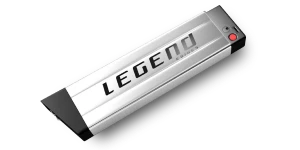
Etna 250 W: 36 V × 14 Ah = 504 Wh.
Etna 500 W: 48 V × 10.5 Ah = 504 Wh.
With identical power demand and riding conditions, their theoretical energy reserve is therefore similar. In normal use, however, the Etna 500 W can deliver more torque and assistance at higher speeds, so it will usually consume energy faster when that extra performance is used.
The Etna 250 W will generally provide greater autonomy. Actual results depend on assistance level, speed, gradient, rider and luggage weight, tyre pressure, temperature, wind, surface and mechanical condition.
Does the bike have start assistance?
Legend eBikes include a walk-assist function that can move the bike at up to approximately 6 km/h while you walk beside it.
Use it to push the eBike on a ramp or slope. Keep both hands on the bike, make sure the path is clear and release the control to stop the function.
Walk assist is not a throttle or a riding mode. Do not activate it while sitting on the bike, and do not use it to carry a passenger or start riding without pedalling.
Do I have to pedal to receive motor assistance?
Yes. The motor provides pedal assistance only while the system detects that you are pedalling.
On the standard configuration, assistance begins at approximately 5 km/h. It stops if you stop pedalling or the speed falls below the activation threshold.
On the 250 W EPAC models, assistance also decreases progressively and stops by 25 km/h.
Can I ride my Legend eBike without assistance?
Yes. Select assistance level 0 or switch off the electrical system and ride it like a conventional bicycle.
You can also continue pedalling if the battery becomes discharged. The bike will feel heavier than a conventional bicycle because of the motor, battery and reinforced components.
Can I change gear while stationary?
You can change the electrical assistance level while stationary, but the derailleur cannot move the chain to another sprocket until the pedals and chain are turning.
Select the required mechanical gear while pedalling forwards with light pressure. Do not shift under heavy load, and never turn the pedals backwards while changing gear.
If you select a gear while stopped, pedal gently when you set off and allow the chain to complete the shift before applying more force or assistance.
What is a Legend Smart eBike?
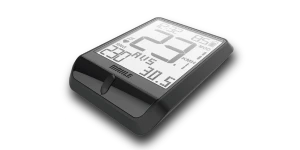
A Legend Smart eBike combines its electrical system with MAHLE connectivity. The functions available depend on the bike's remote and system generation.
Connect the bike to the My SmartBike app by Bluetooth to view ride and bike information such as speed, distance, battery status, activities and route data. Compatible configurations can also use custom motor maps and supported ANT+ devices.
You can review your synchronised activities through the My SmartBike service. Keep the app and bike firmware updated, and follow the pairing instructions for your iWoc remote.
Can I legally ride the Legend Etna 500 W on public roads?
Do not use the Legend Etna 500 W on public roads as a conventional bicycle. It exceeds the EU EPAC limits because its continuous rated power is above 250 W and its assistance can continue above 25 km/h.
Exceeding those limits does not automatically make an individual bike road legal as an L-category vehicle. Public-road use would require the exact vehicle to have the appropriate type approval and conformity documents, registration, number plate, compulsory insurance and any required driving licence and protective equipment.
The Etna 500 W is intended primarily for off-road use. Use it only on private land or in areas where this type of motor vehicle is expressly permitted. An unpaved road or trail may still be a public road or may prohibit motor vehicles, so check the rules for the specific location.
For normal public-road use in the EU, choose the Legend Etna 250 W, Monza, Milano or Siena. These models meet the EPAC power and assistance-speed limits. Local traffic rules still apply.
Requirements vary by country. If you are unsure, contact the local vehicle-registration or traffic authority before riding.